The Letter You Wrote for Someone Else
It is late and you still have four recommendation letters to finish before the deadline. You care about every one of these students. You want to help them. But you have grading to do, your own work waiting, and only so many hours left in the night.
So you open a chatbot, describe the student in a few sentences, and let it draft something polished and complimentary. You skim it, it reads fine, you sign it and send it off. You move on to the next one.
You meant well the entire time. That is what makes what happens next so unfair.
Readers can tell, and they are looking
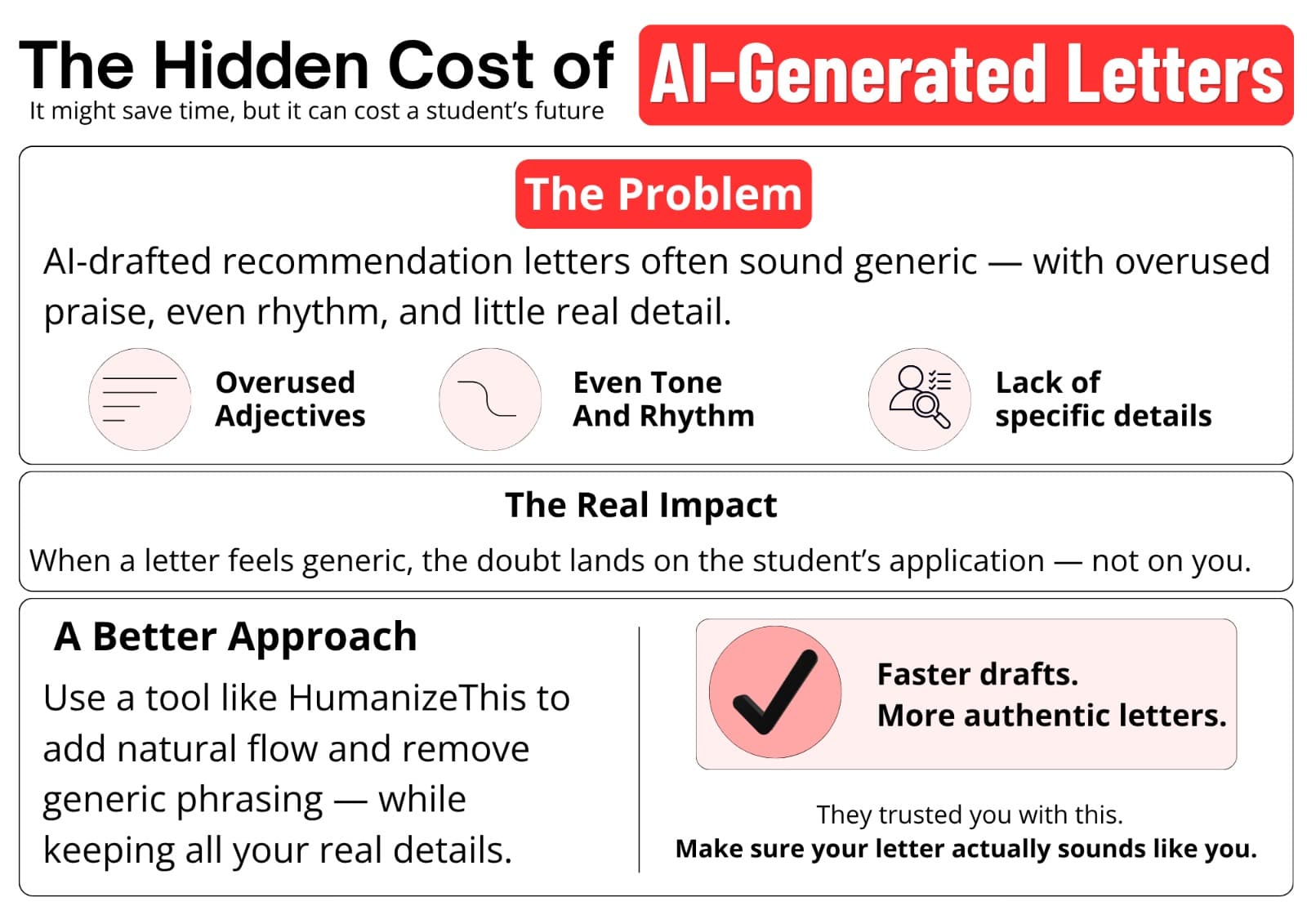
A study published in Scientific Reports found that reviewers and automated classifiers could distinguish AI generated application materials from human written ones at rates well above chance. Admissions readers describe specific patterns they have learned to recognize: long strings of adjectives like exceptional and remarkable with no real story behind them, paragraphs that come out suspiciously even in length and rhythm, vague or missing detail about how well the writer actually knows the person they are recommending. When a committee reads several letters from different recommenders that all sound strangely similar, that pattern gets noticed too.
None of this means the student is untalented, or that you do not genuinely believe in them. It means the letter reads as generic, and generic is exactly what a rushed AI draft tends to sound like once you strip away the specific memory that only you actually have.
Here is the part that should bother you most
In almost every other situation we have written about, the person who gets hurt by sounding like AI is the same person who wrote it. Not here. When your letter reads as generic or gets flagged, the doubt lands on the student's application file, not on you. Most strong recommendation systems have the student waive their right to ever read the letter, which means they cannot proofread it, cannot catch a weak draft, and cannot know if it worked against them. They simply find out later that they did not get in, or did not get the job, with no way of ever tracing it back to a rushed ten minute favor you did on their behalf.
You were trying to help. The structural cost of a shortcut landed entirely on someone who had no say in taking it.
Why the honest fix is not simply writing slower
The instinct is to say just write every letter yourself, carefully, from scratch. In a perfect world, sure. In the actual world, you are writing for a dozen students a semester while doing the rest of your job, and pretending that is not true does not make more hours appear. Refusing the tool entirely is not really the answer either. The answer is making sure the speed does not come at the cost of the one thing that makes a letter actually convincing, real, specific detail that could only have come from someone who knows this particular student.
Where a tool like this actually helps
This is exactly the gap HumanizeThis is built to close. Draft quickly if you need to, but run the result through before you sign it, and it breaks up the generic evenness and predictable phrasing that gets these letters flagged in the first place, while keeping every real detail you actually gave it about the student. It will not invent the specific memory or story that makes a letter land. That part still has to come from you. What it removes is the flattened, interchangeable tone that turns your genuine belief in a student into something that reads like it could have been written about anyone.
They trusted you with this
A student asked you for this letter because they believed your word about them mattered. The least you owe them is a letter that actually sounds like you know who they are, not one that quietly worked against them because the night was long and the deadline was close. Try HumanizeThis before you send the next one, and make sure the favor you meant to do actually helps.